
Savidge Construction builds service stations across Northern California as the general contractor, handling the site work, the fuel system and the building, and carrying the schedule from permit through to the day you start selling fuel.
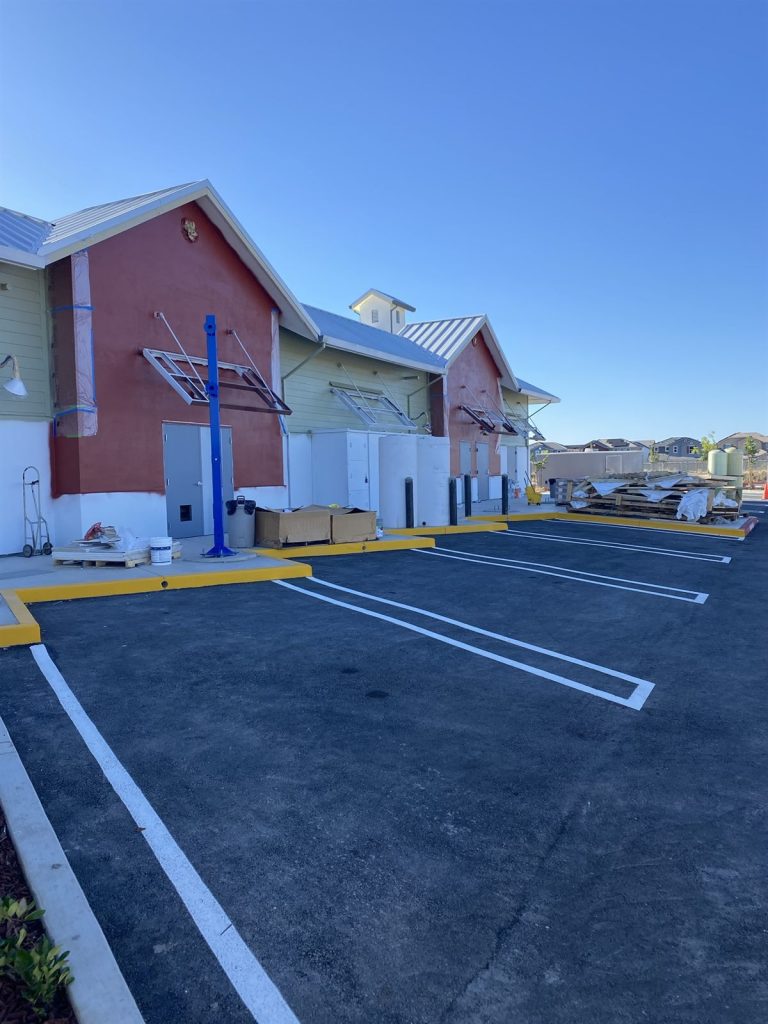
What a Station Build Involves
A gas station is several projects on one lot: a civil project, a hazardous materials project, a commercial building and a retail fit-out.
On a typical ground-up site we are responsible for:
- Demolition and site clearing, including removal of existing tanks and structures.
- Grading and earthwork to design elevation, including site drainage.
- Underground utilities: water, sewer, storm drain, electrical and communications.
- Fuel system: tank excavation and setting, product piping, containment, monitoring and dispensers.
- Concrete: foundations, drive lanes, islands and approaches.
- Building and canopy, through to the finished mini-mart interior.
- Inspections and sign-off at each stage.
We carry all of it as the general contractor: selecting and managing the trades, holding the program, and answering for the date you open.
Why the Hazardous Materials License Matters
Most general contractors can build the store. Fewer hold the hazardous materials certification required to put fuel in the ground, so that scope is subcontracted to a petroleum contractor.
Coordinating that scope is where station schedules slip. Each specialist works to its own backlog, and excavation on a site that has held fuel before often turns up conditions that were not in the drawings.
We hold Class A, Class B and hazardous materials certification under one license and have been building these projects since 1997. We know which approval gates which trade, and we schedule accordingly.
California Contractors License #755898 covers Class A (General Engineering), Class B (General Building), and Hazardous Materials certification. Licensed and insured. License status for any California contractor can be verified with the CSLB.
Permits and Approvals
Fuel projects in California answer to more agencies than most commercial work. Depending on the county, a station build can involve the local building department, the fire authority, the certified unified program agency that oversees hazardous materials, the regional air district for vapour recovery, and the water board where soil or groundwater is in play.
Each has its own submittal requirements and its own queue. We have been working through these agencies since 1997 and we build realistic approval time into the schedule rather than promising a date we would then have to walk back. If you are early in the process and want a candid read on how long approvals are likely to take in a particular jurisdiction, call and ask.
Rebuilds, Rebrands and Remodels
Not every project starts with bare dirt. We also work on sites that are already trading, where the constraint is not just cost but how many days the pumps are down. Rebranding to a new fuel supplier, replacing ageing tanks and lines, adding diesel or DEF, upgrading dispensers, or rebuilding a canopy all need a plan for keeping as much of the site earning as possible while the work happens.
On an operating station, every closed day is fuel volume and inside sales you do not get back. That is worth designing the sequence around, and we will tell you honestly which phases genuinely require a shutdown and which do not.
What Projects Look Like
Our work ranges from tank removal and maintenance packages up to complete ground-up stations with a car wash and mini-mart. We have built for major branded operators including Chevron, Shell and Arco AM/PM sites, and for independent owners running a single location.
If you are weighing whether a site pencils out, we would rather look at it with you early than bid it cold later.
Common Questions
How Long Does a Ground-Up Station Take?
Construction is usually the shorter half of the story. Permitting and approvals vary enormously by jurisdiction, and that is the part worth planning around. Once we are building, a straightforward site moves at a predictable pace. Give us the location and we will tell you what we have seen in that county.
Do You Work as a Subcontractor on Someone Else’s Build?
Yes. If you have a general contractor for the building and need the fuel system done properly, we take that scope on its own. See fuel system installation →
Can You Handle a Site With Contamination History?
We hold the hazardous materials certification and we work on sites with prior fuel use regularly. Where remediation and monitoring are required, we coordinate with the environmental consultant and the overseeing agency rather than working around them.