
Tanks, product piping, containment, monitoring and dispensers, delivered under our hazardous materials certification. We take fuel system work as part of a station build, or entirely on its own for owners and other contractors.
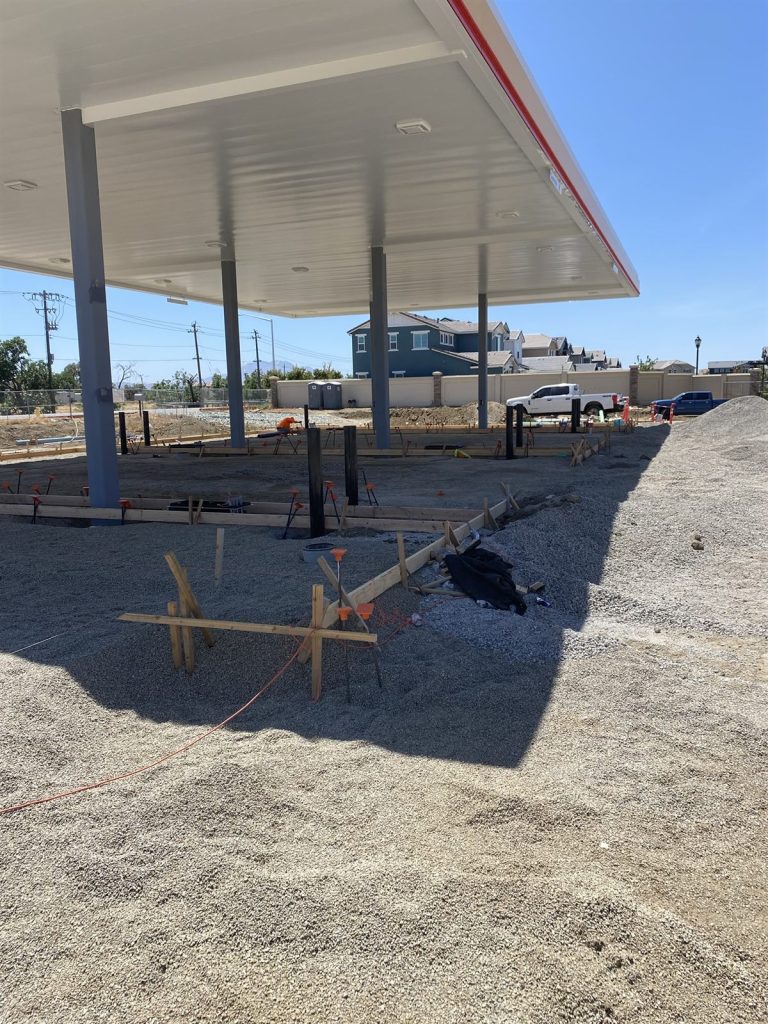
Fuel Work on Its Own, Not Just as Part of a Build
Plenty of our fuel system work happens on projects where somebody else is building the store. If you are a general contractor with a station on your books, or an owner whose builder does not hold hazardous materials certification, this is a scope we take on directly.
The advantage of hiring a contractor who does this every week is not just the license. It is that we know what the inspectors in these counties look for, we know which details cause a failed test, and we have the equipment and the crew sitting an hour away rather than a day away.
What We Install
Underground
- Tank pit excavation, shoring and bedding
- Underground storage tank setting and anchoring
- Double-wall product piping
- Secondary containment and sumps
- Spill buckets and overfill prevention
- Leak detection and monitoring systems
- Vapour recovery piping
Above Ground
- Aboveground storage tanks
- Dispensers and fuel islands
- Island form work and bollards
- Canopy coordination
- Diesel and DEF systems
- Fleet and commercial fuelling
- Tank gauge and console setup
Upgrades and Replacements on Live Sites
Fuel systems do not last forever, and the rules they were built to have moved more than once. Older single-wall tanks and lines, ageing dispensers, tired containment and outdated monitoring all reach a point where replacement is cheaper than the next round of repairs, or where a compliance deadline makes the decision for you.
Work like this happens on a site that is still trading, which changes the whole calculation. The question is not only what the work costs, but how many days the fuel islands are down while it happens. We plan replacements in phases where the site allows it, so you are not closing the whole forecourt when half of it would do.
Not sure whether your system needs replacing or repairing? That is a reasonable thing to be unsure about, and it is not a question you should have to answer before calling someone. Tell us what you have and roughly how old it is, and we will give you a straight assessment. Call 530-317-2011.
Testing, Compliance and Inspections
California regulates fuel systems more tightly than most states, and the requirements sit with several different agencies at once: the local hazardous materials authority, the fire district, the air district for vapour recovery, and the state water board for tank programs.
New and modified systems have to be tested and signed off before they can operate, and the specifics depend on what you installed and where. We handle the testing and inspection process as part of the job rather than handing you a finished system and a list of phone calls to make.
If you have an existing site and you are not certain where you stand with current requirements, that is worth a conversation before it becomes a notice of violation.
Who We Do This For
- Fuel distributors and jobbers managing multiple sites and needing predictable turnaround.
- Station owners and corporate dealers replacing tanks, adding a product, or upgrading dispensers.
- General contractors who hold the overall build but need certified fuel work.
- Commercial and fleet operators putting in their own fuelling for trucks or equipment.
- Property owners inheriting a fuel system with a building purchase.
Common Questions
Will You Quote Fuel System Work Without the Rest of the Build?
Yes. It is a growing part of what we do and we are happy to bid it as a standalone scope.
How Long Does a Tank Replacement Take?
It depends on how much comes out, what the excavation finds, and how quickly the local agency turns around inspections. What we can tell you early is which parts of the schedule are genuinely fixed and which are at the mercy of a permit queue.
Can You Work Around Our Trading Hours?
Often, yes, and it is usually worth doing. Tell us how the site trades and we will build the sequence around your busiest times rather than ours.